Smart Public Toilets Initiative
IoT-enabled hygiene and water conservation systems
Executive Summary
Problem Statement
Traditional public toilets in high-density areas suffer from severe neglect, lack of water management, and unhygienic conditions due to irregular maintenance schedules, leading to health hazards and low citizen usage.
Proposed Engineering Solution
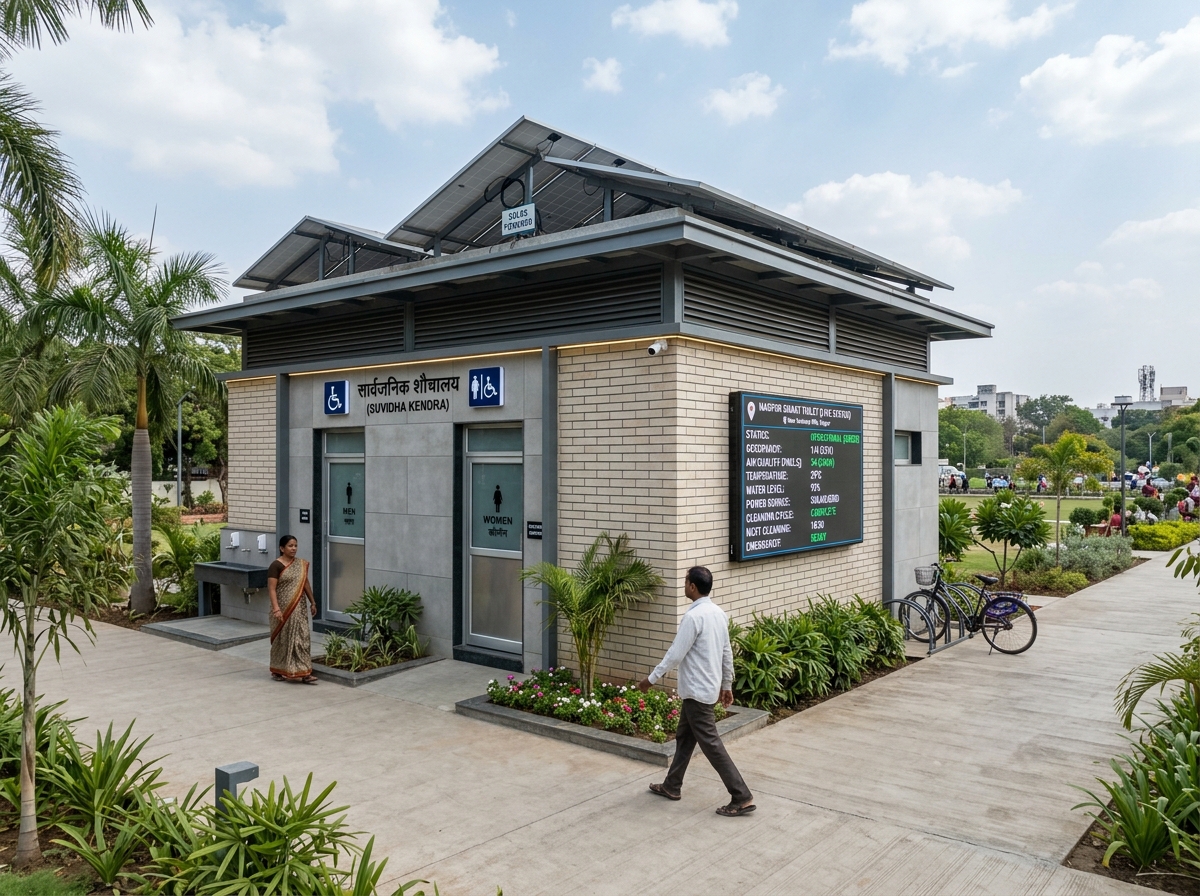
Deploy automated sanitation blocks equipped with integrated IoT sensors for real-time hygiene, utilization, and resource consumption monitoring.
Strategic Objectives
- check_circle Install automated self-cleaning units
- check_circle Deploy IoT monitoring arrays
- check_circle Reduce water consumption by 40%
- check_circle Establish community hygiene standards.
Technology & Telemetry Architecture
Arduino-based flush controller, Ultrasonic water level indicators, Automated solenoid valves, WiFi telemetry gateway.
Measured Social Outcomes
Over 1,200 daily active users across three pilot sites with zero downtime reported in the first quarter of deployment.
UN SDG Alignment
Support this Initiative
Contribute CSR grants, technology resources, or volunteer with our engineering field deployment team.
CSR Partnership → Donate (80G Tax-Exempt) →