Smart School Initiative
Decentralized digital classrooms and literacy hubs
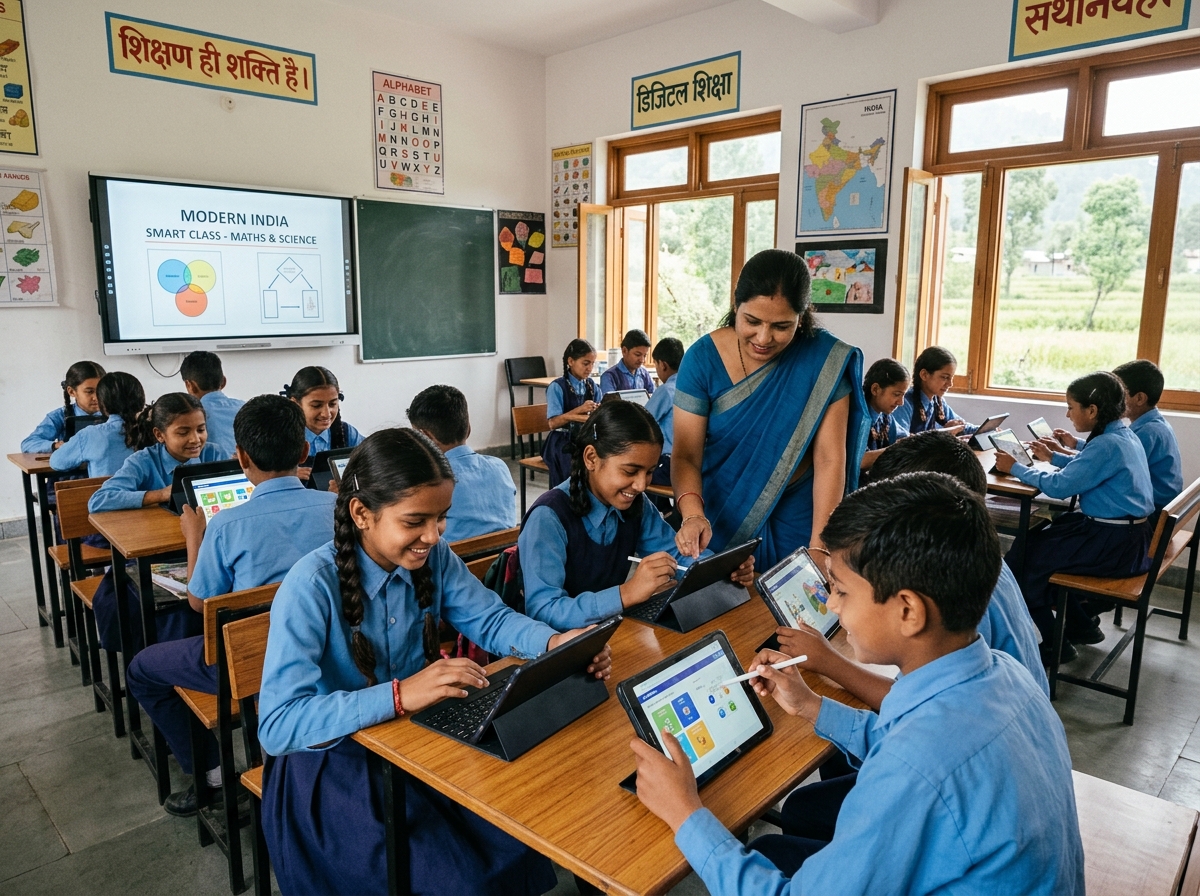
Executive Summary
Problem Statement
Rural schools suffer from outdated learning materials, lack of computer access, and poor internet connectivity, leaving students behind in digital literacy.
Proposed Solution
Deploy solar-powered classroom servers hosting rich interactive syllabus material accessible over local Wi-Fi from cheap tablets.
Project Objectives
- check_circle Deploy solar-powered digital classrooms
- check_circle Provide free educational tablets
- check_circle Host interactive regional study material
- check_circle Train rural primary teachers.
Technology Integration & Infrastructure
Raspberry Pi local educational servers, Android tablets, solar-powered battery cabinets, preloaded offline learning software.
Implementation Methodology
1. Procurement of low-cost Android tablets and solar power backups; 2. Staging local intranet educational servers with regional content; 3. Conducting teacher training workshops; 4. Weekly monitoring of student learning hours.
Expected Outcomes
High student engagement, 30% increase in attendance, and rapid development of basic computer skills among primary school kids.
Impact & Measurable Results
Deployed in 5 rural schools around Nagpur, empowering 350+ children with regular computer-based learning classes.
Frequently Asked Questions
Does this require active internet?
No. All syllabus videos, quizzes, and software are preloaded on a local micro-server that creates a school-wide offline Wi-Fi network.
How are teachers trained?
Navavritti conducts hands-on training sessions for teachers twice a year, ensuring they can operate and troubleshoot the local server.